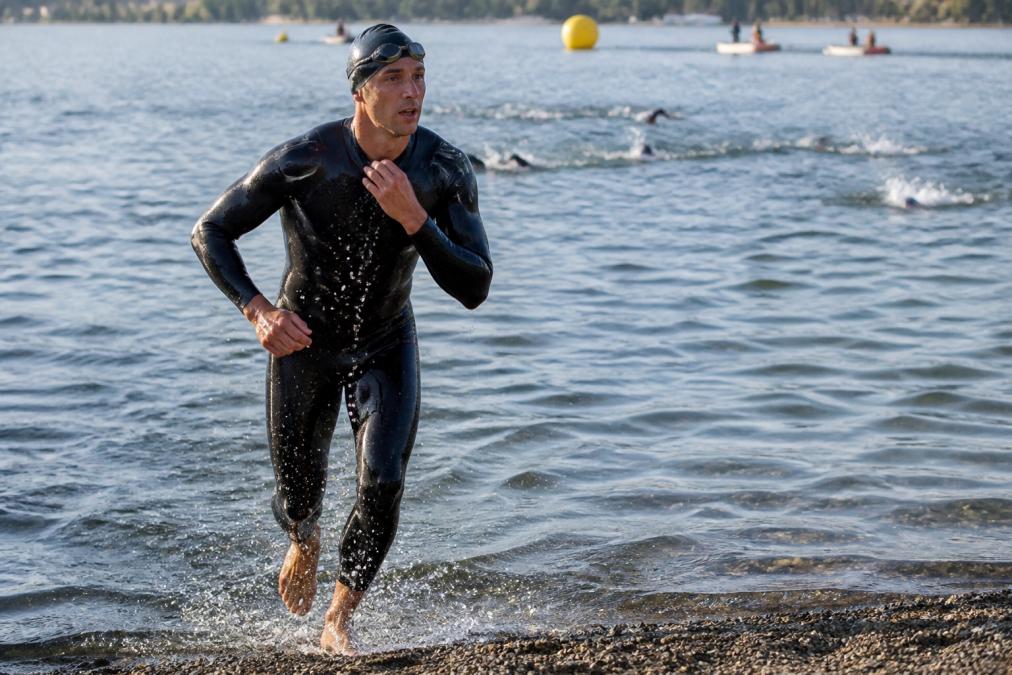
 ultimate-guide
Triathlon Training for Age Groupers: 2026 Guide
Table of Contents
- Triathlon Training for Age Groupers in 2026: Where to Start
- Triathlon Training Plan for Beginners: Your First 12 Weeks
- What You'll Need
- Step 1: Establish Your Baseline [Time: Week 1]
- Step 2: Build Frequency Before Volume [Time: Weeks 2-6]
- Step 3: Add One Longer Session Per Sport [Time: Weeks 7-10]
- Step 4: Practice Transitions and Race-Pace Efforts [Time: Weeks 11-12]
- Triathlon Training Hours Per Week: What Age Groupers Can Realistically Hold
- 80/20 Triathlon Training: Why Easy Days Build Your Race Pace
- Building a Triathlon Training Schedule Around Work and Family
- Periodization, Tapering, and Peaking for Your 2026 A-Race
- Recovery, Injury Prevention, and Post-Race Rebuilding
- Data, Budget, and Age: Three Angles Most Guides Skip
- Frequently Asked Questions
Last Updated: October 7, 2026
Triathlon Training for Age Groupers in 2026: Where to Start
The biggest mistake age groupers make in triathlon training is signing up for a race before deciding what it demands of their week.
A sprint and an Ironman are not the same sport wearing different bibs.
This guide walks through the full 2026 season, from your first 12 weeks to peaking, recovery, and three angles most plans ignore: data, budget, and age.
Pick Your 2026 Race Distance First
Distance dictates everything downstream: weekly hours, long-ride length, and recovery between hard sessions.
- Sprint: Roughly 750 m swim, 20 km bike, 5 km run. Best for first-timers and time-crunched athletes.
- Olympic: 1.5 km swim, 40 km bike, 10 km run. The sweet spot for building real endurance without wrecking your week.
- 70.3: 1.9 km swim, 90 km bike, 21 km run. Requires consistent long rides and a dialed nutrition strategy.
Triathlon Training Plan for Beginners: Your First 12 Weeks
A beginner triathlon training plan for 2026 should build consistency before speed, teaching your body to swim, bike, and run in the same week without falling apart.
Total Time: 6-9 hours per week Difficulty: Beginner
What You'll Need
- Access to a pool or open water
- A road or hybrid bike, plus a trainer for indoor sessions
- Running shoes and a heart rate monitor
Step 1: Establish Your Baseline [Time: Week 1]
Complete one easy session in each sport. Note how each feels, not how fast you go.
Expected Result: A realistic starting point, not a race prediction.
Step 2: Build Frequency Before Volume [Time: Weeks 2-6]
Train each sport two to three times per week. Keep sessions short and conversational.
Step 3: Add One Longer Session Per Sport [Time: Weeks 7-10]
Extend the bike and run gradually. Introduce brick workouts, a bike followed immediately by a run.
Step 4: Practice Transitions and Race-Pace Efforts [Time: Weeks 11-12]
Rehearse the swim-to-bike and bike-to-run transition. Add short race-pace intervals.
Triathlon Training Hours Per Week: What Age Groupers Can Realistically Hold
Most age groupers can sustainably hold 8-12 hours per week, not the 20-plus hours elite athletes log. What matters is the volume you can repeat for 20 weeks without breaking, not the maximum you can survive for one.
| Athlete Profile | Realistic Weekly Hours | Best For |
|---|---|---|
| First-timer, full-time job | 6-8 | Sprint, Olympic |
| Experienced, family commitments | 10-12 | Olympic, 70.3 |
| Competitive age grouper | 14-18 | 70.3, Ironman |
Training load matters more than raw hours. Two focused sessions beat five scattered ones every time.
80/20 Triathlon Training: Why Easy Days Build Your Race Pace
The 80/20 triathlon training method means roughly 80% of sessions stay easy and only 20% push into threshold or harder (pubmed.ncbi.nlm.nih.gov). It sounds backwards, but easy aerobic work builds the engine hard efforts draw on.
Intensity distribution is the lever most age groupers ignore.
Keep the easy days genuinely easy, measured by heart rate or functional threshold power. Save the hard efforts for structured threshold and race-pace work.
Building a Triathlon Training Schedule Around Work and Family
A triathlon training schedule only survives if it bends around your real week. The athletes who stick with the sport long-term are not the most disciplined.
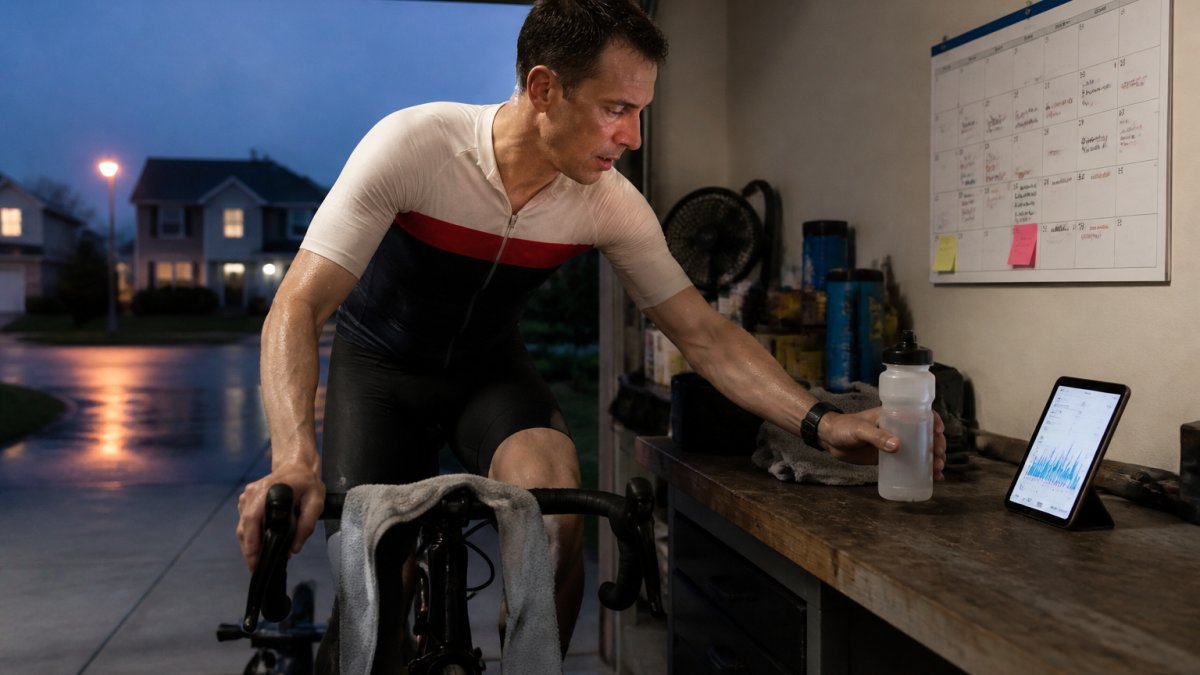
Practical moves that hold up:
- Schedule the long ride on your least chaotic weekend day, not the "ideal" one.
- Keep one flexible session per week that can move without derailing the block.
- Use early mornings for short, high-value sessions and protect evenings for family.
Periodization, Tapering, and Peaking for Your 2026 A-Race
Periodization divides your season into a macrocycle, mesocycles, and microcycles so fitness builds without tipping into overtraining. For an age grouper, it is the difference between arriving at your A-race fresh and arriving exhausted. The concept is simple; the execution is where self-coached athletes go wrong, treating every week as harder than the last. Integrating strength work into this structure requires a disciplined approach to avoiding overtraining, as the added load of resistance sessions can easily compromise the recovery necessary for your primary swim, bike, and run goals.
A Practical 2026 Season Calendar
Work backward from your A-race date, not forward from January. A durable pattern for an age grouper targeting a summer 70.3 or Ironman:
| Phase | Typical Length | Weekly Hours | Primary Goal |
|---|---|---|---|
| Off-season / transition | 2-4 weeks | 3-5 | Rest, mobility, unstructured movement |
| Base 1 (aerobic foundation) | 8-10 weeks | 8-11 | Aerobic capacity, technique, durability |
| Base 2 (aerobic + strength) | 6-8 weeks | 10-13 | Threshold introduction, strength maintenance |
| Build 1 (race-specific) | 4-6 weeks | 11-15 | Race-pace work, brick sessions |
| Build 2 / peak | 3-4 weeks | 12-16 | Race simulation, pacing under fatigue |
| Taper | 2-3 weeks | 50-70% of peak | Shed fatigue, retain sharpness |
| Race week | 7 days | 30-40% of peak | Arrive fresh |
If your A-race is in the spring, compress Base 1 and Base 2 rather than skipping them. If it is in the fall, extend Base 1 and add a second Build block. The phases are the shape; the weeks are negotiable.
Base Building, Threshold Work, and Race Simulation
Base building comes first. Long, easy aerobic work raises aerobic capacity and prepares joints and tendons for the load ahead: one long ride and one long run per week, plus short, frequent swims.
Threshold work follows, lifting your functional threshold power and race-pace tolerance.
Race simulation closes the block: brick workouts at target effort, full transition rehearsals, and pacing tested under fatigue. Ride 80-90% of race distance at goal power, then run 20-30 minutes at goal pace.
Tapering: The Math Most Athletes Get Wrong
Tapering is not rest. It is a planned reduction in training load that lets accumulated fitness surface on race day: a 40-60% volume reduction over two to three weeks, with intensity largely preserved and frequency only slightly reduced.
A workable three-week taper for a 70.3 or Ironman:
- Week 1: Cut volume by about 20-25%. Keep one race-pace session.
- Week 2: Cut volume by about 40-50%. Keep short, sharp efforts, 3 x 5 minutes at race pace, for example.
- Week 3 (race week): Cut volume by 60-70%. Two short sessions with a few race-pace efforts, then rest.
Do not add volume in the final ten days because you feel good. Feeling good is the point of the taper, not a signal to train more.
Peaking Is a Byproduct, Not a Session
Peaking is the payoff, and it is not something you do, it happens when base, threshold, and taper are sequenced correctly. If you have done the work, the fitness is already there; the taper reveals it.
Recovery, Injury Prevention, and Post-Race Rebuilding
Recovery protocols are training, not the absence of it. Age groupers who treat sleep, mobility, and easy days as optional get injured in the final build. The difference between a strong 2026 season and one derailed by a stress reaction is usually whether recovery was planned or improvised.
The Recovery Stack: What Actually Moves the Needle
Not all recovery tools are equal. Ranked roughly by evidence and impact for age groupers:
- Sleep. Seven to nine hours, consistent timing. This is the single largest lever. A common pattern is that athletes who sleep under seven hours report more soreness and slower recovery between hard sessions.
- Fueling. Under-eating on hard training days blunts adaptation and raises injury risk. Eat carbohydrate around sessions, and protein within a few hours after.
- Easy days that are actually easy. The 80/20 rule is a recovery strategy as much as a training strategy. If your easy days are moderate, you never recover enough to go hard.
- Strength training. Two sessions per week, 20-30 minutes, focused on hips, glutes, and single-leg stability. This is injury prevention, not performance enhancement, though it does both.
- Mobility and soft-tissue work. Useful, but a distant fifth behind sleep, food, and pacing.
Interpreting HRV and Training Load Without Overthinking It
Heart rate variability (HRV) and training load tracking are useful only if you interpret them correctly. The mistake is treating a single low HRV reading as a reason to skip a session.
A more reliable approach:
- Track HRV daily, but look at a 7-day rolling average, not today's number.
- A meaningful drop is a sustained decline of roughly 10-15% below your baseline, paired with poor sleep or elevated resting heart rate.
- Training load metrics like acute-to-chronic workload ratio (ACWR) are most useful when kept in a moderate band, a common guideline is staying roughly between 0.8 and 1.3. Spikes above that band are associated with higher injury risk.
Wearables are a tool, not a coach. They inform decisions; they do not make them.
Injury Prevention: The Patterns That Repeat
Most age grouper injuries are overuse injuries that follow predictable patterns:
- Run volume spikes. Increasing weekly run mileage by more than about 10% per week is a classic trigger for shin, knee, and Achilles issues.
- Skipped strength work. Weak glutes and hips show up as runner's knee and IT band problems.
- Bike fit neglect. Knee pain on the bike is often a saddle height or cleat position issue, not a training issue.
The fix is rarely "train less." It is usually "train more specifically, and address the weak link."
Post-Race Rebuilding: The Off-Season Most Athletes Skip
Post-race rebuilding matters as much as the taper. After a major race, take a genuine off-season, two to four weeks of unstructured movement, no intervals, no long rides. Then rebuild base before chasing intensity again.
A workable post-race timeline:
- Week 1-2: Complete rest or very light activity. Eat, sleep, see people you neglected.
- Week 3-4: Easy movement, walks, easy spins, casual swims. No structure.
- Week 5-8: Rebuild aerobic base. Short, easy sessions in all three sports.
Long-term athletic development beats one heroic season. The age groupers still racing in ten years are the ones who took the off-season seriously.
Data, Budget, and Age: Three Angles Most Guides Skip
Data, budget, and age are the three variables most generic plans ignore, and where age groupers win or lose a season.
Data-driven training replaces guesswork with performance metrics. Endurance testing establishes your threshold zones so every session has a purpose, while HRV and training load tracking tell you when to push and back off.
Budget-friendly plans do not require a lab or a fleet of gadgets. A trainer, a heart rate monitor, and a consistent log cover most of what matters.
Age-specific considerations change the equation after 50.
Training for Age Groupers Over 50
Athletes over 50 need more recovery between hard sessions, more strength and mobility work, and a longer base-building phase. Adaptation still happens, it just takes more patience. Consistency and injury prevention matter more than peak weekly volume.
Training for a 2026 triathlon season while holding down a job and a family is a real challenge, and generic plans rarely survive contact with a busy week.
Frequently Asked Questions
When should I start training for a 2026 triathlon?
It depends on your race distance and current fitness. For a sprint or Olympic race, 12 to 16 weeks of structured triathlon training is a sensible runway. For a 70.3, plan on 20 to 24 weeks. For a full Ironman, 24 to 30 weeks gives you room for base building, threshold work, and a taper without cramming. If your 2026 race is in late summer, starting in January or February lets you build gradually instead of chasing fitness in the final month.
How many hours a week should an age-group triathlete train?
Most age groupers racing sprint or Olympic distance hold 6 to 10 hours per week. For 70.3, 10 to 14 hours is common. Ironman training often lands at 14 to 20 hours at peak. The number matters less than consistency and intensity distribution. If you have 8 hours, spend roughly 80 percent of them easy and 20 percent at threshold or above. Adding volume you cannot recover from hurts more than it helps.
What is the 80/20 rule for triathlon?
The 80/20 approach means about 80 percent of your training time sits at low intensity, with 20 percent at threshold or harder. The easy work builds aerobic capacity, capillaries, and fat oxidation. The hard work sharpens functional threshold power and race-pace durability. Age groupers often train at moderate intensity too often, which produces fatigue without the adaptation that either extreme delivers. Heart rate zones or power zones make the split easy to track.
How do I choose a triathlon training plan for my experience level and race distance?
Match the plan to three things: your race distance, your current weekly hours, and your weakest discipline. A beginner plan for a sprint should prioritize swim technique and brick workouts over huge volume. An Ironman plan needs long rides, run durability, and a nutrition strategy built into race simulation. If you have failed plans before, pick one that schedules rest weeks and lets you move sessions when work travel hits.
How can age-group triathletes improve without increasing training volume?
Improve intensity distribution, technique, and recovery before adding hours. A swim stroke fix can save minutes in the water without extra training. Shifting moderate sessions to true easy or true hard raises the quality of every workout. Strength training twice a week supports power and injury prevention. Sleep, hydration, and a real nutrition strategy raise the ceiling on the hours you already train. Endurance testing can also show where your zones are wrong.
How much rest and recovery should triathlon training include?
Plan one full rest day per week and a lighter recovery week every third or fourth week, cutting volume by 30 to 40 percent. Track resting heart rate and heart rate variability to catch overtraining before it derails a block. Sleep is the highest-leverage recovery tool. After an A-race, take one easy week per hour of race effort as a rough guide: a sprint needs days, an Ironman needs weeks. Rebuilding slowly protects long-term development.