 how-to
Preventing Injury in Masters Triathlon Training
Table of Contents
- What You'll Need Before You Start
- How Masters Triathlon Injury Risk Actually Works
- Step 1: Build a Strength Training for Masters Triathletes Foundation
- Step 2: Progress Load Gradually With Periodization
- Step 3: Add Recovery Strategies for Older Endurance Athletes
- Step 4: Follow a Triathlon Training Plan for Masters Athletes Over 50
- Step 5: Cross-Training, Mobility, and Equipment Checks
- Common Mistakes That Cause Masters Triathlon Injury
- Frequently Asked Questions
Last Updated: September 25, 2026
What You'll Need Before You Start
Preventing injury in masters triathlon training starts with an honest look at how your body has changed since your twenties. Recovery takes longer, tendons adapt more slowly, and the same weekly mileage that felt easy a decade ago now leaves you sore for days. This guide walks through steps masters athletes can use to stay healthy while training hard.
Before you build any plan, gather a few basics:
- A recent medical check, especially for heart health
- A training log (paper or app) to track volume and how you feel
- Two short strength sessions per week on your calendar
- One full rest day you actually protect
- Properly fitted running shoes and a bike that matches your body
A common mistake is jumping straight into a race plan without this foundation. The fix is simple: sort out the basics first, then build.
How Masters Triathlon Injury Risk Actually Works
Masters athletes face injury risk that is different from younger competitors. The tissue breakdown happens slowly, so the warning signs are easy to ignore until something tears or flares up.
Sarcopenia, Bone Density, and Connective Tissue Changes
Sarcopenia is the age-related loss of muscle mass and strength. It speeds up after 40 and makes every run, ride, and swim harder on your joints. Bone density also drops, especially for women past menopause (Checking your browser). Meanwhile, tendons and ligaments lose some of their spring.
The result is a body that can still train hard but recovers more slowly. Repetitive stress builds up in the soft tissue before you feel it.
Hormonal Shifts and Recovery Capacity After 40
Testosterone and estrogen both decline with age. Growth hormone drops too. These shifts slow tissue repair and change how you handle hard efforts.
Step 1: Build a Strength Training for Masters Triathletes Foundation
Strength training for masters triathletes is the single best protection against injury. Two short sessions a week build muscle, support bone density, and improve joint stability.
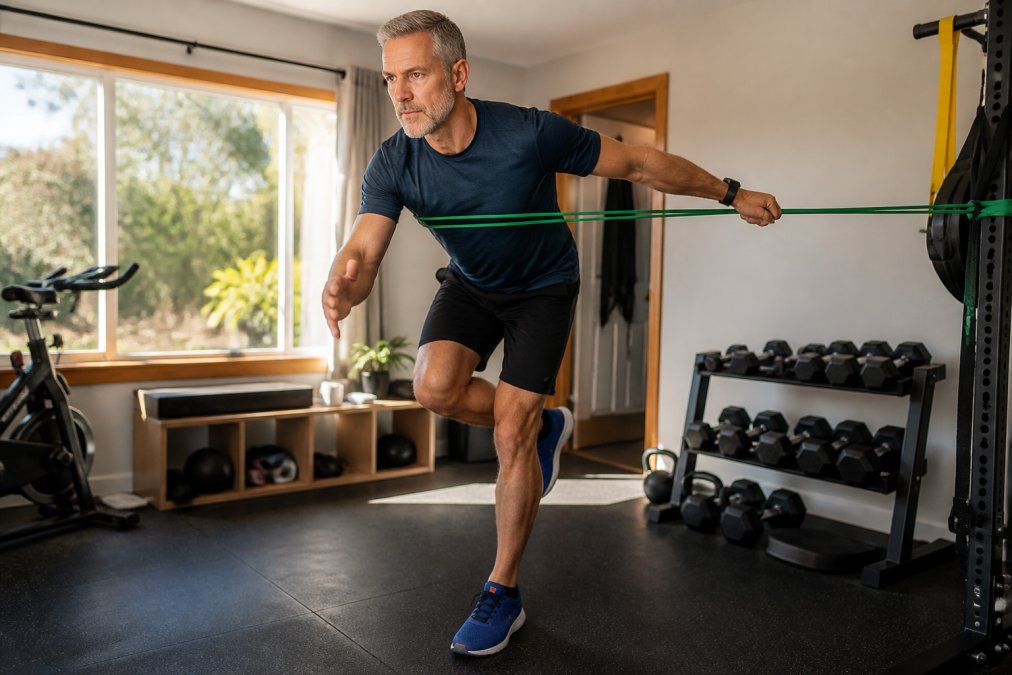
Two Sessions Per Week That Protect Joints and Muscle Integrity
Keep it simple and repeatable:
- Session A: Squats, step-ups, single-leg balance, calf raises
- Session B: Hip hinges, rows, push-ups, plank variations
- Add light plyometrics only if your joints tolerate them
Each session should take 30 to 40 minutes. Focus on form and control, not heavy loads. The goal is muscle integrity and joint stability, not max strength.
Step 2: Progress Load Gradually With Periodization
Periodization means splitting your training into phases with planned changes in volume and intensity. It is the backbone of preventing injury in masters triathlon training because it forces recovery into the plan.
The 10% Rule and Why Intensity Distribution Matters More
The 10% rule says never increase weekly training volume by more than 10% at a time. It is a useful guardrail, but most masters athletes get hurt by intensity, not volume.
A better approach is intensity distribution:
- Keep 80% of training easy (conversational pace)
- Reserve 20% for hard efforts
- Never stack two hard days back to back
- Schedule a lighter week every fourth week
This pattern protects your aerobic capacity while sparing connective tissue.
Step 3: Add Recovery Strategies for Older Endurance Athletes
Recovery strategies for older endurance athletes matter more than the training itself. You cannot out-train poor recovery.
Sleep Hygiene, Active Recovery, and Glycogen Replenishment
Sleep is your best recovery tool. Aim for 7 to 9 hours, keep a consistent bedtime, and cut screens an hour before bed. This is what coaches mean by sleep hygiene.
Active recovery means easy movement on rest days: a short walk, a gentle swim, or light stretching. It boosts blood flow without adding stress.
After long sessions, refill glycogen with carbs and protein within an hour. A simple shake or a real meal both work.
Step 4: Follow a Triathlon Training Plan for Masters Athletes Over 50
A triathlon training plan for masters athletes over 50 should look different from a plan built for a 30-year-old. Fewer hard sessions, more recovery, and a longer build phase all help.
Here is a simple weekly template:
| Day | Session | Purpose |
|---|---|---|
| Monday | Rest or easy walk | Active recovery |
| Tuesday | Strength + short swim | Build stability |
| Wednesday | Easy bike (Zone 2) | Aerobic base |
| Thursday | Strength + easy run | Build stability |
| Friday | Rest | Full recovery |
| Saturday | Long ride or long run | Endurance |
| Sunday | Easy swim or rest | Recovery |
Adjust volume based on how you feel, not just the numbers. If you are coming from a generic plan, expect to train less and recover more.
Step 5: Cross-Training, Mobility, and Equipment Checks
This is where most masters injury guides stop at "stretch more and check your shoes." The two areas they consistently miss are age-appropriate mobility work and equipment-specific risk, and both are among the most common reasons a 40-plus triathlete gets hurt despite doing everything else right.
Cross-Training That Actually Offloads the Joints
Cross-training works when it changes the tissue being loaded, not just the scenery. Swimming removes impact entirely and lets you keep aerobic volume while a tendon calms down. Cycling is low-impact but loads the knee in a fixed plane, so it can aggravate patellofemoral issues if the fit is wrong. Rowing and elliptical work spread load across the posterior chain and hips.
Age-Appropriate Mobility Drills
Generic stretching does little for the stiffness that builds after 40. What helps is targeted, controlled mobility that restores the ranges triathlon positions demand. Ten minutes, two to three times a week:
- Ankle dorsiflexion: knee-to-wall drill, 2 sets of 10 per side. Restores the ankle range running and cycling both need.
- Hip flexor and hip capsule: half-kneeling hip flexor stretch and 90/90 hip switches, 2 sets of 8 per side. Counteracts hours in the aero position.
- Thoracic spine: open-book rotations and foam-roller extensions, 2 sets of 8 per side. Frees the rotation swimming and breathing require.
- Hamstring and calf: eccentric calf lowers off a step, 2 sets of 12. Builds tendon resilience, not just length.
- Single-leg balance: 30 seconds per side, eyes closed when ready. Trains the proprioception that declines with age and prevents falls and ankle rolls.
Equipment-Specific Injury Risks
Equipment is the most overlooked injury catalyst for the 40-plus demographic, because wear and fit problems develop gradually and present as joint pain rather than an obvious fault.
USA Cycling guidance on bike fit and injury prevention
Common Mistakes That Cause Masters Triathlon Injury
The biggest mistakes are predictable. Avoid these and you sidestep most injuries before they start.
- Ignoring early warning signs like sore tendons or stiff joints
- Increasing volume too fast after a break
- Skipping strength training because "there is no time"
- Training hard on back-to-back days
- Neglecting sleep and nutrition during heavy weeks
- Wearing worn-out shoes or riding an ill-fitted bike
- Pushing through fatigue instead of backing off
Frequently Asked Questions
What are the most common overuse injuries in masters triathletes?
Tendinopathy, repetitive stress fractures, and soft tissue strains top the list. Runners over 50 often develop Achilles or plantar issues, cyclists deal with knee tracking problems, and swimmers face shoulder impingement. These build over weeks from training volume that outpaces what connective tissue can adapt to. Managing load, adding functional strength work, and scheduling active recovery days are the practical ways to reduce risk. If pain lingers past a week, get it assessed before it becomes chronic.
How does recovery time change for athletes over 50?
Physiological aging slows glycogen replenishment, reduces heart rate variability, and extends the window for inflammation to settle. A hard session that took 24 hours to recover from at 35 may take 48 hours at 55. That means recovery strategies for older endurance athletes matter more than training volume. Prioritize sleep hygiene, protein with each meal, and at least one full rest day per week. Tracking resting heart rate each morning gives you a simple signal for when to push and when to back off.
What role does strength training play in preventing triathlon injuries?
Strength training for masters triathletes builds the muscle integrity and bone density that decline with age. Two sessions per week targeting functional strength (squats, lunges, single-leg work, rows) improve proprioception and postural balance, which directly reduce fall and strain risk. It also raises anaerobic threshold without adding impact loading to joints. Keep sessions to 30-40 minutes and schedule them on easy training days so they do not compete with key workouts.
How can masters athletes balance intensity with injury prevention?
Use an 80/20 split: roughly 80% of training at low aerobic capacity effort, 20% at high intensity. Masters athletes lose the ability to absorb repeated hard days, so stack intensity into two focused sessions per week and keep the rest genuinely easy. Plan micro-cycles of three weeks building load followed by one lighter week. Watch for overtraining syndrome signs like poor sleep, mood changes, and rising resting heart rate. A triathlon training plan for masters athletes over 50 should build these deload weeks in from day one.