 ultimate-guide
Data Driven Endurance Testing for Triathletes
Table of Contents
- Why Data Driven Endurance Testing Beats Guessing
- How to Test Triathlon Fitness Across Swim, Bike, and Run
- Setting Triathlon Training Benchmarks You Can Trust
- Turning Test Results Into Triathlon Training Zones
- Test Reliability, Measurement Error, and Standardization
- Using Wearable Data and Training Load Without Overreacting
- Fitting Endurance Testing Into a Periodized Training Plan
- Conclusion
- Frequently Asked Questions
Last Updated: October 18, 2026
Why Data Driven Endurance Testing Beats Guessing
Data driven endurance testing for triathletes replaces feel with measurable evidence. At Peak Coaching, we build every age-group training plan on this foundation.
Guessing feels productive: push harder on intervals, add volume when a race looms, trust consistency.
Perceived effort lies: fatigue, weather, sleep, and motivation distort how hard a session actually was.
Below: how to test all three disciplines, set trustworthy benchmarks, and fold results into a periodized plan without overreacting to noise.
How to Test Triathlon Fitness Across Swim, Bike, and Run
Testing triathlon fitness means running a standardized, repeatable protocol in each discipline that produces a pace, power, or speed figure you can track over time.
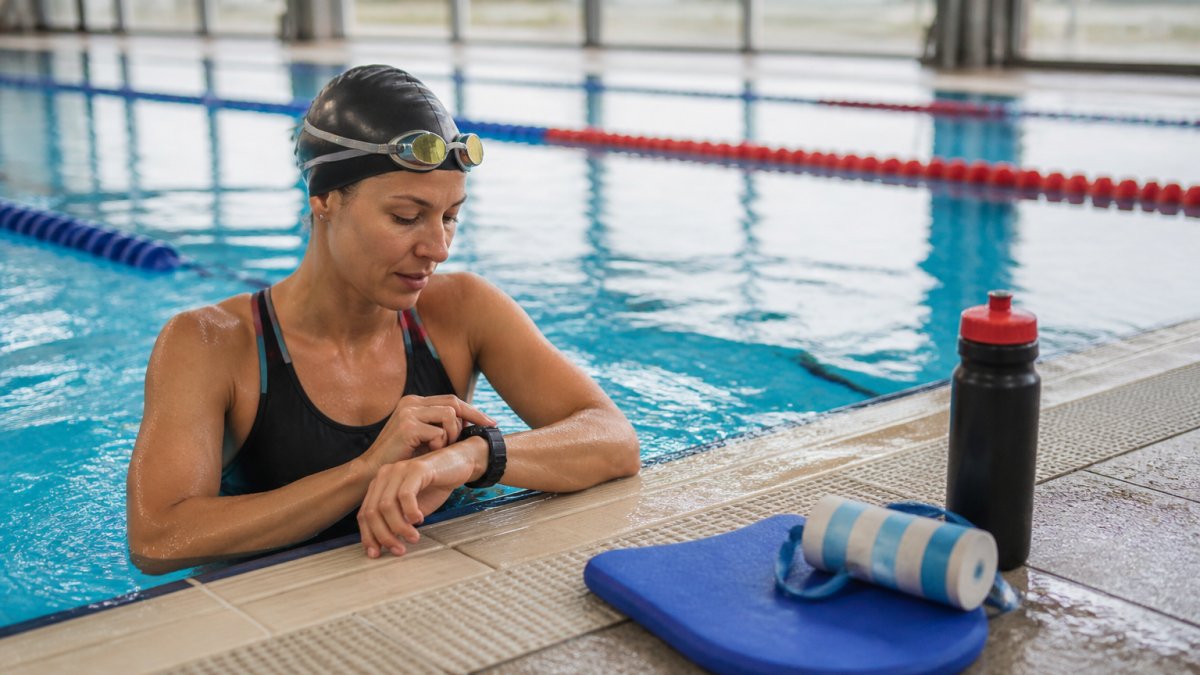
Most athletes test one discipline well and neglect the other two.
Below is a unified protocol you can run the same way every cycle across all three sports: a preparation checklist, a testing-week schedule, and discipline-specific steps.
The Preparation Checklist
Run this checklist before every test cycle so the conditions match the last one:
- Schedule all three tests at the end of a recovery week, not mid-block
- Book pool time in a quiet lane at your usual hour
- Confirm the same bike, trainer, power meter, and calibration procedure
The Testing-Week Schedule
Spread the three tests across one week so fatigue from one does not contaminate the next:
| Day | Session | Purpose |
|---|---|---|
| Monday | Swim test | Fresh from the weekend, pool is quiet |
| Wednesday | Bike test | 48 hours after swim |
| Friday | Run test | 48 hours after bike |
| Weekend | Easy aerobic only | Absorb the week, no hard efforts |
If your schedule forces two tests into one day, test the discipline you care most about first and accept that the second result is compromised. Do not compare it against a clean result from the previous cycle.
The Swim Threshold Test for Triathletes
The swim threshold test for triathletes establishes the pace you can hold for roughly 30 to 60 minutes of sustained effort.
Step by step:
- Warm up 400 to 600 meters easy with a few short builds
- Rest two to three minutes at the wall
- Swim the test distance at the hardest pace you can hold evenly
- Record total time and split every 100 meters if your watch allows
- Calculate pace per 100 meters from the total time
That pace per 100 meters becomes your swim threshold anchor for easy aerobic pace, threshold sets, and race-pace targets.
Lane traffic or a skipped warm-up distorts the result. Swim early, alone if possible, and repeat in the same pool at the same time of day.
Bike and Run Test Protocols
Bike and run protocols follow the same logic: a controlled effort long enough to expose threshold, short enough to recover from within a training week.
For the bike, a 20-minute power test after a structured warm-up is the most common field protocol; average power adjusted downward by a small percentage approximates functional threshold power.
Step by step for the bike:
- Warm up 15 to 20 minutes with three short efforts above threshold
- Ride 20 minutes at the hardest pace you can sustain evenly
- Record average power (or heart rate and speed) for the full 20 minutes
- Cool down 10 minutes easy
For the run, a 30-minute time trial on flat terrain works well; record average pace and heart rate for the final 20 minutes, which better reflects threshold once pacing settles.
Step by step for the run:
- Warm up 10 to 15 minutes easy with a few strides
- Run 30 minutes at the hardest pace you can hold evenly
- Record average pace and heart rate for the final 20 minutes
- Cool down 10 minutes easy
| Discipline | Protocol | Duration | Primary Metric |
|---|---|---|---|
| Swim | 1,000m or 1,500m time trial | 15-30 min | Pace per 100m |
| Swim | Critical Swim Speed (400m + 200m) | 10-15 min | CSS pace |
| Bike | 20-minute power test | 25-30 min | Average power |
| Bike | 30-minute time trial (no power meter) | 35-40 min | Heart rate and speed |
| Run | 30-minute time trial | 35-40 min | Pace and heart rate |
The No-Tech Version
Without a power meter, premium watch, or lab access, run the same protocol with a stopwatch and perceived effort: same course, warm-up, and duration, recording total time plus a 1-to-10 effort rating. The numbers are coarser, but repeatability matters more, a stopwatch and fixed course track change better than a gadget used inconsistently.
Setting Triathlon Training Benchmarks You Can Trust
Triathlon training benchmarks are only useful if they reflect a genuine, repeatable effort. A benchmark set on a bad day or after a disrupted week is worse than none, because you will build zones on a false floor.
Three conditions protect a benchmark:
- Preparation: arrive rested, hydrated, and fueled. Treat the test like a race.
- Standardization: same course, same equipment, same time of day, same warm-up.
- Documentation: record conditions, sleep, and how you felt. Context explains outliers later.
A common mistake is testing after a hard block because motivation peaks. Test after a recovery week instead: the number will be lower but honest, and honest numbers produce zones you can actually train in.
Turning Test Results Into Triathlon Training Zones
Triathlon training zones are the practical output of testing: once you have a threshold anchor in each discipline, you divide intensity into easy aerobic, tempo, threshold, and above-threshold bands.
The simplest approach is percentage-based zones from your test result: easy aerobic well below threshold, tempo just under it, threshold intervals at it, VO2 work above it.
Two cautions: derive bike and run zones separately, since a single set misrepresents one discipline; and re-test before adjusting zones, because zones from a six-month-old test describe an athlete who no longer exists.
Test Reliability, Measurement Error, and Standardization
Test reliability describes how consistently a protocol produces the same result under the same conditions. Measurement error is the variation you cannot eliminate: heart rate drift, power meter tolerance, pool length differences, and day-to-day biological fluctuation.
No test is perfectly precise. Small movements between tests may be measurement error, not fitness change, treat small swings as noise and look for consistent trends across multiple tests.
What Each Metric Actually Tells You
A single number is never a complete measure of fitness. Each metric answers a different question, and the skill is knowing which to trust for which decision:
- Pace and speed measure output against the clock. They are the most direct race-relevant signal, but they are distorted by wind, terrain, and pool conditions.
- Power measures work delivered to the bike. It is the most responsive metric on the bike because it ignores wind and grade, but it says nothing about how much that work cost you.
- Heart rate measures the body's response to effort. It lags behind pace and power, drifts upward with heat and dehydration, and is best read as a cost signal rather than a performance signal.
A common pattern is over-trusting whichever metric you own the best device for: the power-meter athlete builds everything around watts and ignores the swim; the heart-rate athlete reads every elevated morning reading as overtraining. Neither interprets data, both react to one channel.
Deciding Whether a Change Is Real
Before adjusting zones, ask whether the change exceeds normal variation. A practical rule: roughly two to three percent in a threshold metric is day-to-day noise for many athletes, while five percent or more, confirmed across two matched tests, is worth acting on.
Apply three filters before you believe a result:
- Magnitude: is the change larger than your normal test-to-test swing?
- Consistency: did it show up in more than one metric or more than one test?
- Context: did sleep, fueling, weather, or equipment differ from the last test?
If any filter fails, log the result and wait for the next cycle. Reacting to noise is how athletes chase zones that describe a bad day rather than a fitter athlete.
Standardization Is the Lever You Control
Standardization is the lever you control. Fix the variables you can:
- Same course or pool, same lane, same direction
- Same equipment, including shoes, bike, and power meter calibration
- Same warm-up duration and intensity
Testing indoors on a trainer and treadmill removes weather entirely, a trade-off that costs some specificity but buys reliability, which matters more when tracking change over months.
Testing Under Fatigue and Transferring to Race Day
Standalone tests measure fresh fitness, but a triathlon is raced tired, after a swim that precedes a bike that precedes a run, a gap most testing guides ignore.
Two practices close it. First, run one or two brick sessions per build block, a bike test followed immediately by a short run at race pace, and record how the run pace compares to your fresh run test; that difference is your personal fatigue penalty, more useful for race pacing than any fresh number.
Using Wearable Data and Training Load Without Overreacting
Wearable data and training load metrics are supporting evidence, not the verdict.
The trap is reacting to every daily fluctuation. A single poor sleep score or one-day heart rate variability dip means little; trends across two to three weeks carry weight, while daily readings mostly produce anxiety.
Use wearables to answer three questions: Am I recovering between hard sessions? Is my training load rising faster than I can absorb? Are there early warning signs of illness or overreach?
Fitting Endurance Testing Into a Periodized Training Plan
Place tests where they inform decisions: before a build block to set its zones, before race-specific work to confirm the base phase delivered.
The full protocol, repeated across a season:
- Schedule the test at the end of a recovery week, never mid-block
- Test swim, bike, and run on separate days with 48 hours between
- Record conditions, sleep, and fueling alongside the result
- Recalculate zones only after the test, not before
- Log the result and compare against the previous cycle
- Adjust the next block based on the trend, not a single number
That structure keeps testing useful rather than another source of fatigue, and makes the data comparable across a full season, the entire point.
If you would rather not manage the protocol alone, our team at Peak Coaching runs endurance testing and builds the resulting zones directly into your plan.
Conclusion
The hardest part of endurance testing is not the test itself but trusting the numbers when they contradict how you feel and resisting the urge to chase every fluctuation.
Peak Coaching builds endurance testing and personalized multisport coaching around age group athletes with full lives. Our coaches bring certifications and firsthand racing experience to every plan, along with access to specialized training camps.
Frequently Asked Questions
What fitness tests should triathletes use to measure endurance?
Use one repeatable test per discipline. In the pool, a 400-yard time trial or a Critical Swim Speed test gives you a swim pace baseline. On the bike, a 20-minute effort or a ramp test estimates threshold power. On the run, a 30-minute time trial or a 5K effort sets run pace. Pair these with a benchmark workout you repeat every 6-8 weeks so you can compare data driven endurance testing results over time rather than guessing.
How often should triathletes test their swim, bike, and run fitness?
Most age group athletes get useful signal from a full test block every 6-8 weeks, with lighter benchmark workouts in between. Testing more often than every 4 weeks adds fatigue without new information, because real fitness gains take weeks to show up above measurement error. Schedule tests at the end of a recovery week so you are not measuring tired legs, and keep the protocol identical each time.
How can I set triathlon training zones from fitness test results?
Take your test average and apply a percentage. For bike power, threshold is roughly 95% of a 20-minute best effort; zone 2 sits around 56-75% of that threshold. For run pace, threshold pace comes from a 30-minute effort, and easy running is 60-90 seconds per mile slower. For swim, Critical Swim Speed from a 400 and 200 yard test sets your threshold pace. Round zones to practical ranges and adjust after the next test.
What is the difference between a fitness test and a benchmark workout?
A fitness test is a maximal, standardized effort designed to produce numbers you can compare, such as a 20-minute bike effort or a 400-yard swim time trial. A benchmark workout is a repeatable session, like 4 x 1 mile at goal race pace, that shows how the training is transferring without the full cost of a test. Use tests to set triathlon training zones and benchmarks to confirm the zones still fit.
How do I test triathlon fitness without racing?
You do not need a race to get data. Run a 30-minute solo time trial on a flat loop, do a 20-minute bike effort on a trainer for controlled conditions, and swim a 400-yard time trial in the pool. Keep the course, equipment, and time of day consistent. Racing adds adrenaline and course variability, so a controlled solo test often gives cleaner numbers for tracking fitness changes over time.
How should I adjust training after an endurance test?
Compare the result to your last test before changing anything. A meaningful change in threshold power, pace, or Critical Swim Speed means updating your triathlon training zones and rebalancing weekly volume toward your weakest discipline. If the numbers are flat, check sleep, training load, and whether the test was compromised by fatigue or illness before adding intensity. Small swings inside measurement error are noise, not a signal to rebuild the plan.