 how-to
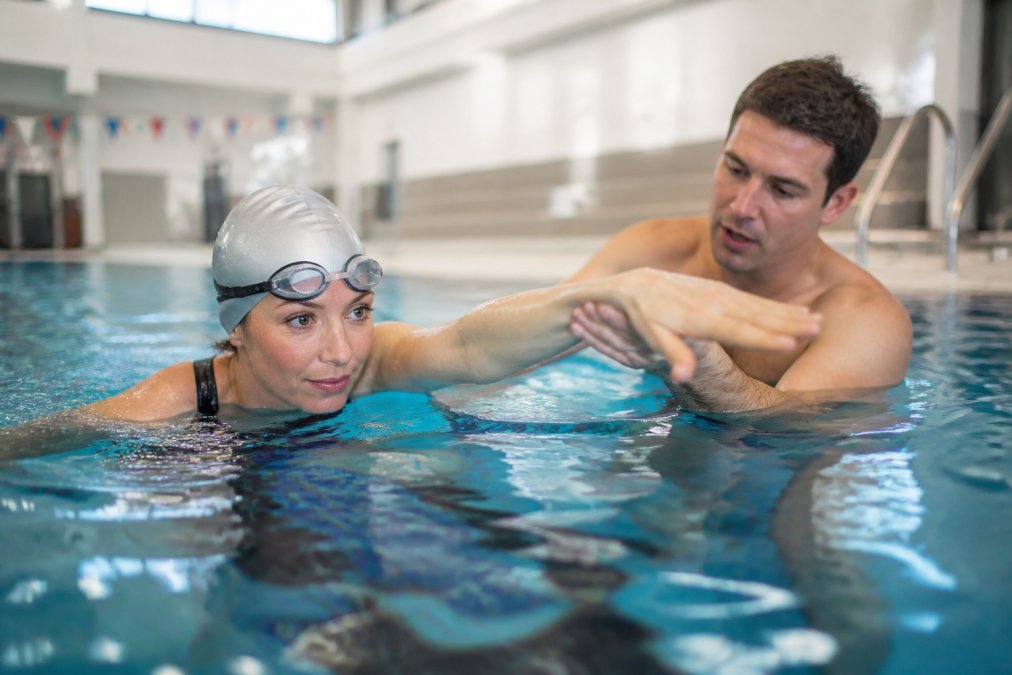
Improve Swim Technique as Adult Beginner
Table of Contents
- Why Adult Swimmers Need a Different Approach
- Build Water Confidence and Overcome Mental Barriers
- Essential Swimming Gear and Equipment for Beginners
- How to Breathe While Swimming Freestyle
- Swimming Drills for Beginners That Build Proper Technique
- How Long to Learn to Swim as an Adult
- Master Body Position and Stroke Mechanics
- Common Swimming Mistakes Adult Beginners Make
- Frequently Asked Questions
Last Updated: September 21, 2026
Why Adult Swimmers Need a Different Approach
Learning to swim as an adult differs fundamentally from teaching children: your body is denser, less buoyant, and your nervous system carries decades of movement patterns that water contradicts. But these differences aren't obstacles, they're advantages if you train smart.
Adult learners bring focus, discipline, and the ability to understand why a drill matters. You'll progress in weeks what takes children months because you can self-correct faster.
The right swim technique adult beginner approach requires a different mental model: buoyancy before speed, alignment before power, breathing before distance.
Build Water Confidence and Overcome Mental Barriers
Most adult swimmers carry psychological baggage: a near-drowning, a parent who pushed too hard, years of avoiding pools. Your nervous system remembers fear even if your conscious mind doesn't.
Separate water confidence from swimming ability, they're two distinct skills. Build confidence first.
Water familiarity exercises:
- Wade in the shallow end for 10 minutes, eyes open, just feeling the water pressure
- Float on your back with support (wall or noodle) for 30 seconds at a time
- Push off the wall and glide on your stomach, no kicking, just feeling your body's natural position
- Practice falling forward into the water and standing up immediately, this removes the fear of losing control
- Submerge your face for 5 seconds at a time in the shallow end, building comfort with water over your eyes
The psychological barrier isn't weakness, it's your nervous system doing its job. Spend 2-3 weeks building water confidence before worrying about stroke mechanics. This foundation prevents burnout and builds mental resilience for longer distances.
Essential Swimming Gear and Equipment for Beginners
What you actually need:
- Goggles that fit without leaking (test them before buying)
- A swim cap if your hair is long or you want less drag
- A basic one-piece or jammers (not board shorts, they drag)
- A kickboard for isolated kick drills
What helps but isn't essential:
- Pull buoy for arm-focused drills
- Hand paddles for building catch strength
- Fins for kick drills (they make your legs feel more powerful)
- Mesh bag to carry wet gear
Buy goggles first, leaking goggles kill motivation faster than anything else. Test them in-store by pushing against your face without the strap. If they stick, they fit.
A kickboard is your second purchase. Kick drills build core engagement and body rotation without the complexity of coordinating arms and breathing.
How to Breathe While Swimming Freestyle
Breathing is where most adult beginners fall apart. Lifting your head sinks your hips, which kills body position and makes every stroke harder.
Rhythmic breathing means turning your head to the side. Your mouth clears the water from the bow wave your body creates, you don't need to lift.
The breathing progression:
-
Stationary breathing (no movement): Stand in waist-deep water. Turn your head to the side so one ear is underwater. Your mouth should clear the surface naturally. Breathe in through your mouth. Turn back to center and exhale through your nose and mouth underwater. Do this 10 times on each side.
-
Breathing while kicking (with kickboard): Hold the kickboard with straight arms. Kick gently. Every third kick, turn your head to breathe. The rhythm is: kick, kick, breathe, kick, kick, breathe. Practice this until it feels automatic. Spend 50 meters on this drill.
-
Breathing with one-arm freestyle: Push off the wall on your stomach. One arm stays extended forward. The other arm does a full stroke. Breathe every time the stroking arm recovers. Do 25 meters with the right arm stroking, 25 meters with the left. This teaches you to breathe without the complexity of both arms moving.
-
Full freestyle with bilateral breathing: Swim freestyle but breathe every third stroke. This means you breathe on both sides. Bilateral breathing teaches balance. It prevents overreliance on one side.
Most swimmers hold their breath, which tightens the chest and causes panic. Instead, exhale continuously underwater through your nose so your lungs are empty when you turn to breathe.
Swimming Drills for Beginners That Build Proper Technique
Drills isolate one part of the stroke to build muscle memory for correct movement patterns.
Kick Drills for Body Alignment
Your kick provides propulsion and stabilizes body position. Most beginners kick from the knees, efficient kicking comes from hip rotation and core engagement.
Kick drill progression:
-
Wall kick: Hold the wall with one hand. Kick gently for 30 seconds. Feel the kick coming from your hips, not your knees. Your legs should move like a dolphin's tail, not scissors.
-
Kickboard kick: Hold the kickboard with extended arms. Kick for 50 meters at an easy pace. Focus on relaxation. Your feet should be loose. Tension in your ankles kills efficiency.
-
Kick on your side: Push off the wall on your side. One arm is extended forward. Kick for 25 meters. Switch sides and repeat. This teaches you how your body should feel during the stroking phase of freestyle.
-
Kick without a board: Push off the wall on your stomach with arms extended. Kick for 25 meters. This is harder because your arms don't provide flotation. Your kick has to support your body position. This is the real skill.
Spend 200 meters per session on kick drills. This builds the foundation for everything else.
Arm Drill Progressions
Your arms create propulsion through the catch (when your hand and forearm lock into the water) and recovery (when your arm returns forward).
Arm drill progression:
-
Kick with one arm extended: Kick on your stomach with one arm extended forward and one arm at your side. Kick for 25 meters. Switch arms and repeat. This teaches you how your body should feel with one arm extended.
-
Catch-up drill: Swim freestyle but don't start the next stroke until your recovering hand "catches up" and touches your extended hand. This forces you to glide and reduces stroke rate. Gliding builds distance per stroke.
-
Fingertip drag: During the recovery phase, drag your fingertips along the surface of the water. This forces you to keep your elbow high and your arm relaxed. High elbow recovery is the mark of efficient freestyle.
-
Sculling: Push off the wall on your stomach. Keep your arms at your sides, elbows bent at 90 degrees. Move your hands in a figure-8 pattern. This teaches you how to generate propulsion with your hands and forearms, not just your arms.
Spend 200-300 meters per session on arm drills to build catch strength and arm position.
How Long to Learn to Swim as an Adult
Progress depends on consistency and starting point: prior swimming experience, training frequency, and willingness to spend time on drills all accelerate improvement.
Progress depends on consistency and starting point: prior swimming experience, training frequency, and willingness to spend time on drills all accelerate improvement.
Breaking through a plateau may require dryland training (for core strength and shoulder mobility) and video analysis (to see what you're actually doing versus what you think you're doing).
Master Body Position and Stroke Mechanics
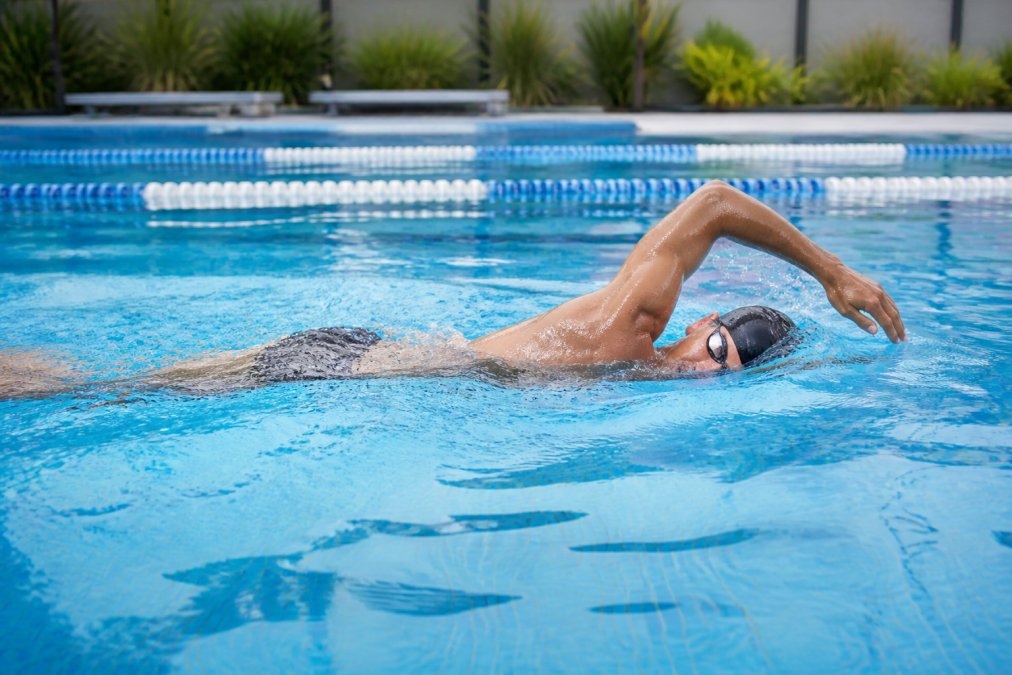
Body position determines everything: sinking hips force legs to work harder, high head position sinks hips further, and poor shoulder rotation kills arm efficiency. Position comes first, power comes later.
Achieving Proper Body Alignment
Your body should be nearly horizontal with head neutral (looking slightly forward and down), hips high, and legs near the surface.
Most beginners sink their hips by looking forward instead of down. Keep your eyes down, your head position controls your hips.
Body position drill:
Push off the wall on your stomach with arms extended.
The Catch and Recovery Phases
The catch is the most important part of freestyle, where you lock your hand and forearm into the water. Most beginners catch too early or too deep.
Common Swimming Mistakes Adult Beginners Make
Lifting your head instead of turning it. Your instinct is to look forward. This sinks your hips and kills your position. Turn your head to the side. Your mouth clears the water from the bow wave your body creates.
Frequently Asked Questions
How often should an adult beginner practice to see technique improvements?
Most adult beginners may see technique improvements with 3-4 focused sessions per week. Consistency matters more than intensity. Spacing sessions 1-2 days apart allows your muscles to adapt without overuse injury. Quality drills in shorter sessions (30-45 minutes) may be more effective than sporadic longer workouts.
What are the most common swimming mistakes for adult beginners?
Adult beginners typically drop their hips, hold their breath, and rush their strokes. These errors destroy efficiency and exhaust you quickly. Holding tension in your shoulders and neck prevents rotation, limiting power. Many adults also kick from the knees instead of the hips, wasting energy. Bilateral breathing, switching sides, challenges most beginners, but it's essential for balanced technique. The good news: these mistakes are often fixable with targeted drills and body awareness work.
How can I improve my breathing technique while swimming freestyle?
Rhythmic breathing is the foundation. Start by practicing bilateral breathing, exhaling into the water on counts 2-3, then turning to inhale on count 4. This builds lung control and prevents breath-holding. Use a kickboard to isolate breathing without worrying about arm mechanics. Once comfortable, integrate breathing into full strokes by turning your head (not lifting it) as your opposite arm recovers. Hypoxic training, holding your breath slightly longer, may build confidence and oxygen efficiency.
Is it realistic to improve swim technique significantly as an adult beginner?
Yes. Adult learners often progress faster than children in technique because you understand body mechanics and can self-correct. Adult learners often progress faster than children in technique because you understand body mechanics and can self-correct. Your age group experience and discipline as an adult may accelerate learning, you're not fighting against habits, you're building new ones intentionally.